
Europe Travel Guides
Europe is waiting to be explored. Guides for countries, cities and regions, with everything you need for your next trip.- Countries44
- UNESCO sites470+
- Time zones4
- Guides published2
Exploring Europe
Europe stretches from the Atlantic Ocean in the west to the Ural Mountains and the Caspian Sea in the east, giving it a huge variety of climates and landscapes in a relatively compact area. In a single trip you can move from Mediterranean coasts to Alpine peaks and then on to medieval towns or ultramodern capitals.
Culturally, Europe is a dense mix of languages, cuisines, and traditions, shaped by ancient Greece and Rome, the Middle Ages, the Renaissance, and the modern era of the European Union. Travelers experience this history in walkable old towns, world-class museums, and UNESCO World Heritage sites scattered across almost every country.
There are around 44 countries in Europe as defined by the United Nations, ranging from large nations like France, Italy, Germany, and Spain to microstates such as Monaco and San Marino. Because borders are relatively close together, it is common to visit multiple countries in one itinerary, especially using trains or low-cost airlines.
For visitors from North America, Europe often feels both familiar and different at the same time, with widespread tourism infrastructure but also strong local identities from region to region. This makes it a flexible destination whether the goal is relaxed sightseeing, food and wine, outdoor adventure, or nightlife.
Languages of Europe
Europe is linguistically diverse, with major language families including Germanic (such as English and German), Romance (such as French, Spanish, and Italian), and Slavic (such as Polish and Russian). English is widely used in tourism and hospitality sectors, especially in northern and western Europe, which helps visitors navigate even when they do not speak local languages.
Currency Used in Europe
Many European Union countries share the euro as a common currency, simplifying payments across a large part of the continent. However, some countries, including the United Kingdom, Switzerland, and a few EU members, maintain their own national currencies, so travelers may encounter several during a multi-country trip.
Things to Do in Europe
Popular activities in Europe include exploring historic city centers, visiting museums and art galleries, enjoying regional food and wine, and taking part in local festivals. Outdoor options range from hiking in the Alps and fjords to sailing in the Mediterranean and biking through countryside regions such as Tuscany or the Netherlands.
Best Time to Visit Europe
The best time to visit Europe depends on what kind of trip you’re planning, but most travelers find April through October to be ideal. Spring and early summer bring pleasant weather, blooming landscapes, and lively festivals, making it perfect for sightseeing and outdoor adventures. July and August are the warmest and busiest months, especially in popular destinations like France, Italy, and Spain, so expect larger crowds and higher prices.
If you prefer fewer tourists and more affordable travel, consider visiting in the shoulder seasons like March to April or September to October. The weather is still comfortable in many regions, and you’ll enjoy a more relaxed atmosphere with better deals on hotels and flights. Winter, from November to February, is great for those who love snow sports or cozy city breaks, with magical Christmas markets and skiing opportunities in the Alps and across Northern Europe.
No matter when you visit, Europe has something incredible to offer in every season. Whether it’s spring blossoms, warm summer nights, autumn vineyards, or festive winter lights, there’s always a perfect time to explore the continent’s beauty and charm.
What to Expect When Visiting Europe
Travelers can expect generally good infrastructure, including extensive rail networks, frequent budget flights, and a wide range of accommodation options from hostels to luxury hotels. In the Schengen Area, many countries share open internal borders, which makes crossing from one member state to another feel almost like moving between U.S. states.
How to Get to Europe
From North America, most visitors arrive by direct transatlantic flights into major hubs such as London, Paris, Amsterdam, Frankfurt, Madrid, and Rome, then connect onward by air or rail. Cruise ships also call at ports in the Mediterranean and northern Europe, but flying is by far the most common entry method for international tourists.
Where to Stay in Europe
Europe offers varied places to stay, including centrally located hotels, guesthouses, apartments, and hostels that cater well to both budget and midrange travelers. Large cities usually have well-defined central districts that are convenient for sightseeing, while smaller towns often cluster lodging around historic centers or main train stations.
How to Get Around in Europe
Within Europe, long-distance trains, high-speed rail lines, and regional routes connect most major cities and many towns, making rail a popular and often scenic way to travel. For longer jumps or tighter schedules, low-cost airlines link hundreds of city pairs, while local public transit and walkable centers make it easy to get around once you arrive.
Where in Europe
Countries with published guides, and the ones still to come. This list builds itself as guides go live.
Recent Travel Guides for Europe

The Ultimate Norway Travel Guide
Introduction Norway’s fjords, cities, and Arctic landscapes draw hundreds of thousands of visitors each year. Most people assume this...
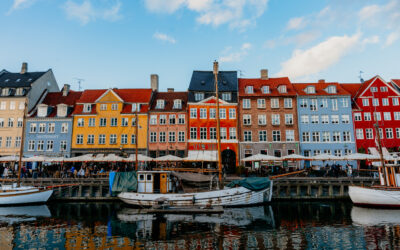
The Ultimate Denmark Travel Guide
History of Denmark: From Vikings to Modern Scandinavia Denmark's story shows how one country transformed itself over centuries. Before...
Frequently Asked Questions About Traveling in Europe
For short tourist stays, most visitors from the United States, Canada, Australia and the United Kingdom do not need a visa for the Schengen Area. Entry rules do change, and a pre-travel authorization for visa-exempt visitors has been in progress for several years, so check your own government's travel advice and the official EU entry pages close to your departure date rather than trusting a blog post, this one included.
Schengen is a group of European countries that have removed passport checks at their shared borders, which is why you can cross from France into Belgium without stopping. The standard allowance for visa-exempt visitors is 90 days within any rolling 180-day period, and it applies to the whole area rather than to each country. Three weeks in Spain and three weeks in Italy both come out of the same 90.
No, and assuming it is will cost you money in card fees. Many European Union countries share the euro, but the United Kingdom, Switzerland, Norway, Denmark, Sweden, Poland, Hungary and Czechia all keep their own currencies, among others. A single two-week trip can easily involve three currencies.
The shoulder seasons, roughly March to April and September to October, are the reliable answer. Flights and accommodation drop from their July and August peaks, the weather across most of the continent is still comfortable, and the queues at the major sights are far shorter. Winter outside the Christmas market period is cheaper again, though the daylight is short and some smaller attractions close for the season.
For journeys under about five hours, the train usually wins once you count the trip out to the airport, the security queue and the wait at the gate. City center to city center is the honest comparison, not airport to airport. For the long diagonals, Lisbon to Helsinki and the like, a low-cost flight is the sensible choice and often the cheaper one.
Fewer than you want to. Two or three countries in two weeks leaves room to actually see places instead of spending your days in transit and your evenings repacking. Every border crossing costs most of a day once you account for the getting there, the checking in and the finding your feet again.
You can travel comfortably in English across most of northern and western Europe, particularly in hotels, restaurants and transport. It thins out in rural areas and in parts of southern and eastern Europe, where learning even a handful of words visibly changes how people respond to you. Set up a translation app that works offline before you leave, because the moment you need it is usually the moment you have no signal.
It varies so much by country that a single figure for Europe is close to useless. Norway and Switzerland will run several times the daily cost of Portugal or Poland for the same standard of trip. The country guides on this site give real costs for the places they cover, which is a far better starting point than a continental average.
For high-speed and long-distance routes, yes, and the saving is often substantial. Advance fares on the French, Spanish and Italian high-speed networks are released months ahead and climb as seats sell. Regional and local trains are usually a flat fare, so there is nothing to gain by booking those early and flexibility is worth more.
Far less than in North America, and over-tipping marks you out. Service is normally included in the bill, and rounding up or leaving a small amount for good service covers it in most countries. Some places, including much of Italy, add a cover charge instead. That is not a tip, and it is not optional.
Most of continental Europe uses the two-round-pin Type C and Type F sockets at 230 volts, while the United Kingdom and Ireland use the three-rectangular-pin Type G. One adapter covering both, plus a check that your charger accepts 230 volts, handles almost any itinerary.
Broadly yes, including for a first solo trip, and the density of the rail network makes moving between places on your own straightforward. The realistic risk is petty theft rather than violence, and it concentrates in crowded tourist areas, main railway stations and busy metro lines in the larger cities. Nothing valuable in a back pocket, and a bag you can keep in front of you, handles most of it.
Generally no. Cards are accepted almost everywhere, and withdrawing local currency from a bank ATM on arrival gives a better rate than an airport exchange desk. What matters far more is carrying a card with no foreign transaction fee, and always choosing to be charged in the local currency when a card machine offers you the choice.
It depends on what you want out of it, but for a first trip the practical answers are Italy, Spain, France, the Netherlands or Portugal, because the transport is easy, English is widely spoken in tourist areas and the distances between highlights are short. If the budget is the binding constraint, Portugal, Poland and Czechia deliver more for the money than the western European classics.