

Table of Contents
- Visit during shoulder seasons (May–June or September–October) to cut costs 30–40% while enjoying better crowds and good weather.
- Use public transport and ferries plus advance bookings for trains to save significantly versus flights, car rentals, or commercial fjord cruises.
- Prioritize free outdoor experiences—hiking Preikestolen, fjord viewpoints, and public museums—to keep daily budgets as low as $80–120.
Introduction
Norway’s fjords, vibrant cities, and Arctic landscapes draw hundreds of thousands of visitors each year. Most people assume this Scandinavian destination costs too much. Here’s the truth: you experience Norway’s magic without emptying your wallet.
You chase the Northern Lights across winter skies, hike to dramatic mountain peaks like Preikestolen, or explore Oslo’s Viking heritage. This guide combines practical planning advice, seasonal insights, and hidden experiences to help you make the most of every krona. You’ll learn to navigate transportation through scenic railways and ferries, build realistic daily budgets, and find authentic budget accommodation beyond expensive hotels. The question you ask is: Can I really afford Norway? The answer is yes.
You’ll discover how to explore iconic fjords like Geirangerfjord and Sognefjord without expensive cruise markups. You’ll find free hiking trails and public spaces. You’ll explore underrated regions beyond the Oslo-Bergen tourist circuit. You’ll craft itineraries for your timeline and budget. By the time you finish reading this guide, you’ll have the detailed guidance and practical strategies to confidently plan your Scandinavian adventure.
When Is the Best Time of Year to Visit Norway?
Summer, roughly June to August, is peak season and brings the warmest weather, usually around 15–20°C (59–68°F), along with nearly endless daylight and even the midnight sun in northern Norway where you can experience 20 or more hours of light. This is when almost all attractions are fully open, services run frequently, and hiking conditions are at their best, but the popularity comes with crowded sights, busy hiking trails, and the highest prices of the year, often 20–40% above average.
During this period, accommodation costs spike, popular hostels and budget hotels book out weeks in advance, and mid-range travelers should plan on spending about $150–300+ USD per day, making summer especially attractive for families tied to school holidays or anyone prioritizing midnight sun and the best chance of consistently good weather.
Shoulder Seasons (May-June and September-October): The Sweet Spot
The shoulder seasons of May–June and September–October are often the sweet spot, combining more pleasant prices with still-comfortable conditions. In these months, daily costs for mid-range travel tend to fall to around $90–150 USD, with prices roughly 30–40% lower than during peak summer, while the weather usually sits around 10–15°C (50–59°F) and remains suitable for hiking and general sightseeing. Crowds thin out, attractions typically stay open (though some in the far north may run on reduced hours), and the softer light creates excellent conditions for photography, especially with spring greenery or autumn colors in the landscapes.
The trade-offs are more variable weather, increased chances of rain, and the fact that the Northern Lights are not visible in late spring, but many travelers find that May and early June offer a particularly appealing blend of long daylight, warming temperatures, and lower crowds, while September pairs relatively stable weather with striking fall foliage.
Winter (November–February): Northern Lights Season and Budget Bargains
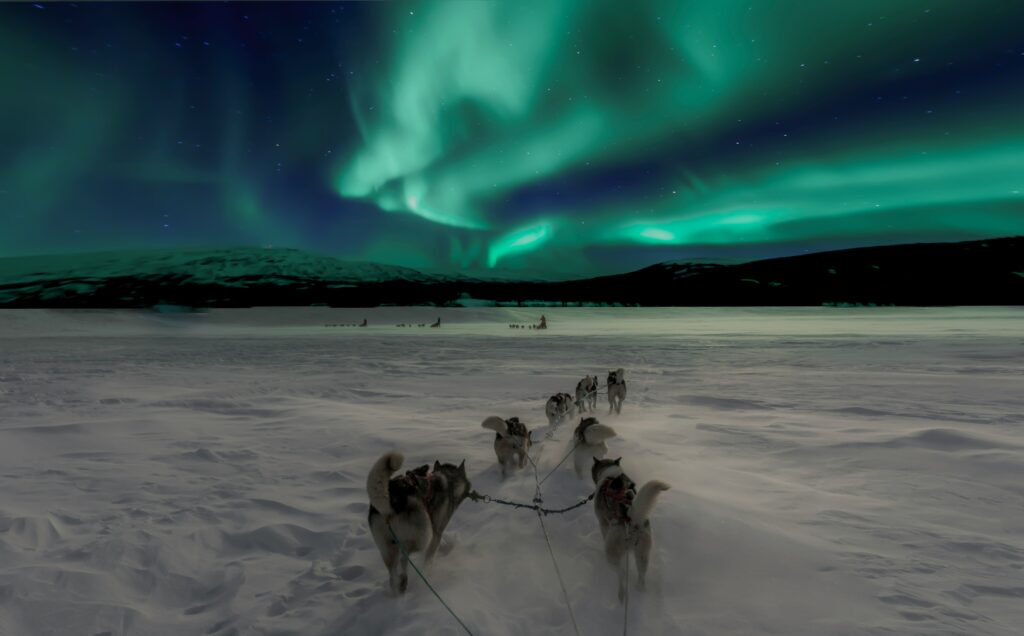
Winter, from November through February, transforms Norway into a snow-clad destination that rewards travelers seeking Northern Lights and substantial savings. This is usually the cheapest period, with many accommodation and activity prices dropping 40–50% below summer levels and overall daily costs often falling to around $80–120 USD for those who plan carefully.
The big draws are the aurora, which is typically most visible between November and February, dramatic snowy landscapes, and winter activities like skiing, snowshoeing, and ice fishing, all enjoyed with far fewer tourists than in summer. Conditions can be harsh, with temperatures often between about -5 and -15°C (23–5°F), limited daylight, and even 24-hour darkness above the Arctic Circle, and some attractions close or run on restricted schedules, but those willing to dress warmly and remain flexible are rewarded with uniquely atmospheric experiences.
November can be an especially interesting “hidden” month because Northern Lights are already visible while prices remain low and some summer-oriented attractions still operate partially, whereas February is often ideal for winter sports thanks to reliable snow and well-developed seasonal infrastructure.
How to Get to Norway
Getting to Norway involves choosing between flights, ferries, or driving. For most international travelers, flying is the practical choice.
How to Fly into Norway
Oslo Airport (Gardermoen, OSL) handles most international flights. Bergen Airport (BGI) serves western fjord regions. Stavanger Airport (SVG) provides access to southwestern areas. Trondheim Airport (TRD) connects to central Norway.
Direct international flights arrive from major North American cities (New York, Boston, Chicago, Los Angeles, Toronto) through SAS, Norwegian Air, United, and American Airlines. European routes connect from London, Paris, Berlin, Amsterdam, and Copenhagen through SAS, Lufthansa, KLM, British Airways, and budget carriers like Ryanair and EasyJet.
Money-Saving Flight Strategies for Norway
- Book 2-3 months in advance for 30-40% better prices
- Fly mid-week (Tuesday-Thursday) for 15-25% savings
- Choose shoulder seasons (May-June or September-October) for lower fares
Alternative entry points save significant money. Flying into Copenhagen or Stockholm, then taking budget flights or trains to Norway, sometimes costs less than direct flights to Oslo. Use flight comparison tools like Google Flights or Skyscanner with flexible dates.
How to Take the Train or Ferry to Norway
The Oslo Central Station connects to Europe through scenic rail routes via Denmark and Sweden. The Copenhagen-Oslo route offers comfortable overnight journeys (approximately 16 hours) doubling as accommodation, saving hotel costs.
Ferry routes connect Norway to neighboring countries, primarily Denmark, Sweden, and the UK. The Bergen-Hirtshals (Denmark) ferry offers picturesque 15-hour journeys. The Oslo-Kiel (Germany) overnight ferry provides another option. Ferry travel is genuinely scenic and often cheaper than budget flights if you book strategically or take deck space for minimal cost.
How to Get Around in Norway
Navigating within Norway efficiently and affordably depends on choosing the right transportation mix for your itinerary.
The National Train Network in Norway
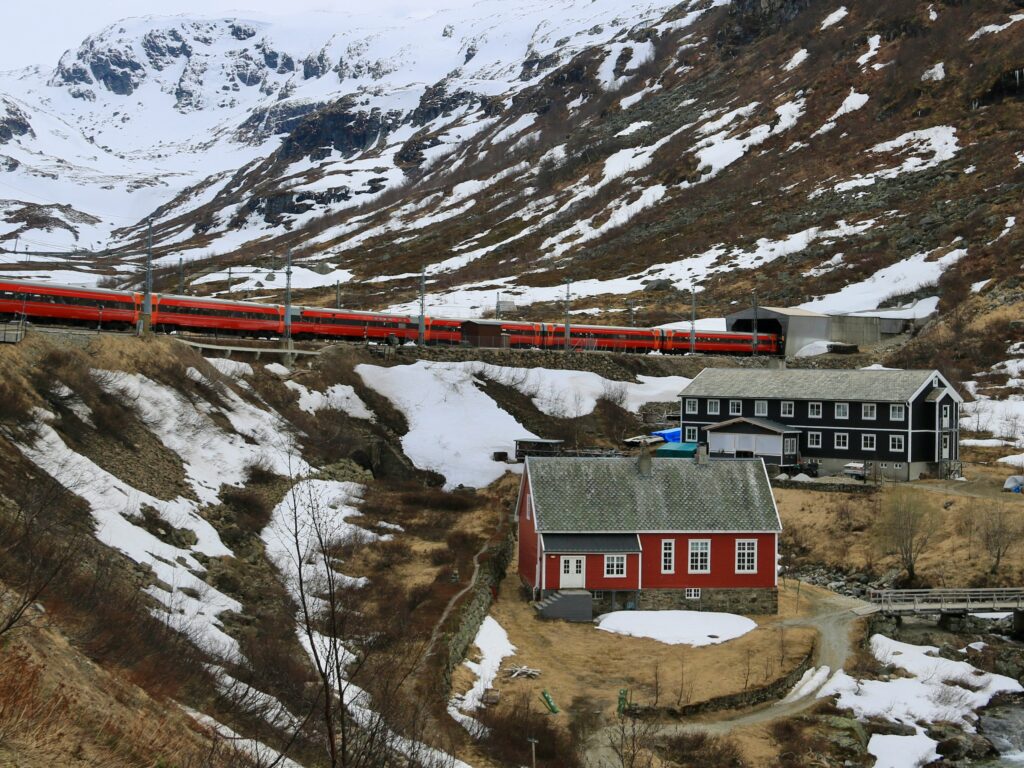
Norway’s rail network connects major cities and towns with comfortable, efficient trains offering stunning scenery. Key routes include:
- Bergen Railway (Oslo–Bergen): 7 hours traversing mountains, valleys, and fjord edges. One of the world’s most scenic train journeys. Costs range $30-70 USD depending on booking timing.
- Flåm Railway (Myrdal–Flåm): A 20-km branch line descending 865 meters through 20 tunnels with dramatic hairpin turns and waterfall views. Often combined with scenic fjord cruises. Costs roughly $25-35 USD per ticket.
- Oslo–Trondheim: 6.5-hour journey through central Norway. Costs $40-80 USD.
Purchase tickets through NSB’s website or Go-Ahead. Booking 1-2 weeks in advance yields 30-50% discounts versus same-week bookings. Travel mid-week for cheaper fares. Some routes offer special “mini-price” fares if booked significantly in advance (these are genuinely cheap but non-flexible).
Regional Buses and Ferries in Norway
Regional bus networks connect towns, villages, and attractions not served by trains through companies like Nettbuss, Kystekspressen, and Vy at rates of $15-40 USD for longer routes. Book through Busbud, GetByBus, or Flixbus to compare prices across operators.
Fjord ferries aren’t transportation, they’re scenic experiences doubling as sightseeing. Public ferries traversing Geirangerfjord cost $25-50 USD versus $100-200+ for commercial tour boats, delivering identical stunning landscape views at a fraction of the cost. Sognefjord ferries connect small villages with fares of $10-20 USD per segment.
Renting a Car in Norway
Renting a car in Norway is particularly useful for exploring remote regions, reaching hiking trailheads, or traveling with a group, since it offers flexibility and access where public transport may be limited.
Daily car rentals for economy vehicles typically run about $40–80 USD, with fuel costs around $1.50–2.00 USD per liter and road tolls adding roughly $5–20 USD per day depending on your route.
For point-to-point journeys such as Oslo to Bergen, however, trains and buses are usually cheaper and remove the stress of driving, parking, and dealing with tolls, making them the more convenient option for linear itineraries. In practice, car rentals become most cost-effective when you are designing a custom route through fjord country or other rural areas, where the extra freedom and access can justify the higher overall transportation costs.
Things to Do in Norway: Must-See Experiences
Norway offers iconic attractions alongside hidden gems. Strategic prioritization helps budget travelers maximize experiences within time and financial constraints.
Hike to Preikestolen (Pulpit Rock)
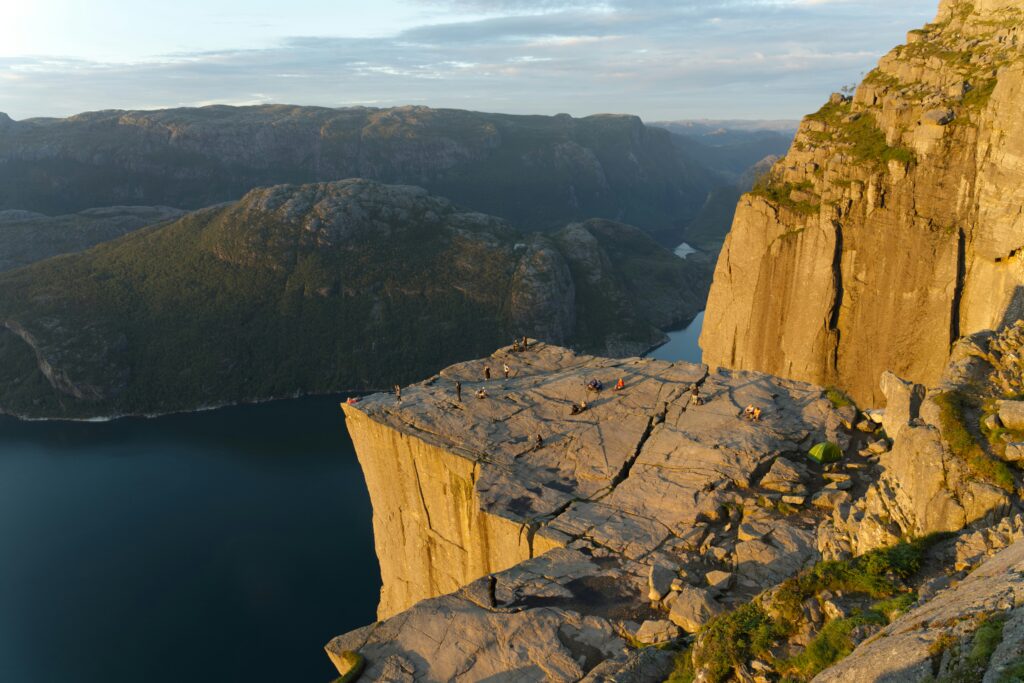
If you like a good hike with a big payoff, Preikestolen (Pulpit Rock) is hard to beat. This dramatic cliff rises about 604 meters above Lysefjord, with a wide plateau at the top that feels made for lingering over photos and quiet moments. The hike itself takes around two hours up and two hours down, and while it is moderately strenuous, most people with a reasonable fitness level can manage it at a steady pace.
To keep costs down, skip the pricey commercial shuttles and use the public bus from Stavanger instead, then pack snacks or a simple picnic from a local grocery store rather than relying on the trailhead café.
Experience the Northern Lights
Chasing the Northern Lights is another unforgettable experience, especially in places like Tromsø or Alta north of the Arctic Circle. From roughly November to February, the aurora often ripples across the sky in shades of green and purple on clear, dark nights.
You do not have to spend a fortune on tours to enjoy it; many travelers stay in simple hostels or cabins, step outside when the skies are clear, and watch from public viewpoints or open fields. Organized tours can be worthwhile if you want expert guidance or transport to the best spots, but the sky itself is free, and patient, budget-conscious travelers frequently see the lights without extra fees.

Cruise Geirangerfjord Affordably
If fjords are high on your list, Geirangerfjord delivers towering cliffs, waterfalls, and classic postcard views without requiring a luxury cruise. Instead of booking expensive commercial fjord tours, you can ride the regular public ferry that travels the same route and offers virtually identical scenery from the deck. This way, you sit alongside locals and other independent travelers while paying a fraction of the cost. For an even cheaper angle on the landscape, you can hike the surrounding mountains and enjoy sweeping views down into the fjord from above.
Explore Sognefjord
Sognefjord, Norway’s longest fjord at over 200 kilometers, is another fantastic option, and it tends to feel a bit less crowded while being every bit as beautiful. Small villages like Flåm or Undredal make great bases, with easy access to ferry routes that branch off into quieter corners filled with waterfalls and mountain vistas. Local ferries are usually affordable and allow you to hop between villages and side fjords, and the surrounding trails are free to hike. With a modest nightly budget for accommodation and careful planning of ferry segments, Sognefjord can be both scenic and relatively gentle on your wallet.
Ride the Flåm Railway
For many visitors, the Flåm Railway is a highlight all on its own. This 20-kilometer train journey drops about 865 meters in elevation, threading through tunnels and clinging to steep slopes as it passes waterfalls, farms, and dramatic valley views. It is often packaged together with fjord cruises, but even as a standalone trip it feels special and is well worth the ticket price if you enjoy scenic rail experiences. Booking in advance can help secure better prices and seats, especially in the busier months.
Summit Trolltunga
If you are up for a serious challenge, the hike to Trolltunga offers a full-day adventure with truly surreal views. The rock formation juts out horizontally from a cliff face, about 700 meters above a lake, creating one of the most famous photo spots in Norway. The trek typically takes 10–12 hours roundtrip and is considered strenuous, so it suits experienced hikers or those prepared for a long day with proper gear and an early start. The trail itself is free to access, so most of the cost comes from getting to the trailhead and finding a place to stay nearby.
Visit the Lofoten Islands
The Lofoten Islands bring together sharp peaks, sheltered bays, and small fishing villages in a way that feels both rugged and cozy. Travelers on a budget often choose simple cabins or hostels, some of which are surprisingly affordable given the remote setting, and then spend their days hiking free trails, beachcombing, or fishing. Getting there can involve a combination of flights, buses, and ferries, but once you arrive, many of the best experiences, like walking along wild beaches, photographing colorful rorbuer, or watching the changing Arctic lights, do not cost anything.
Explore Viking Heritage in Oslo
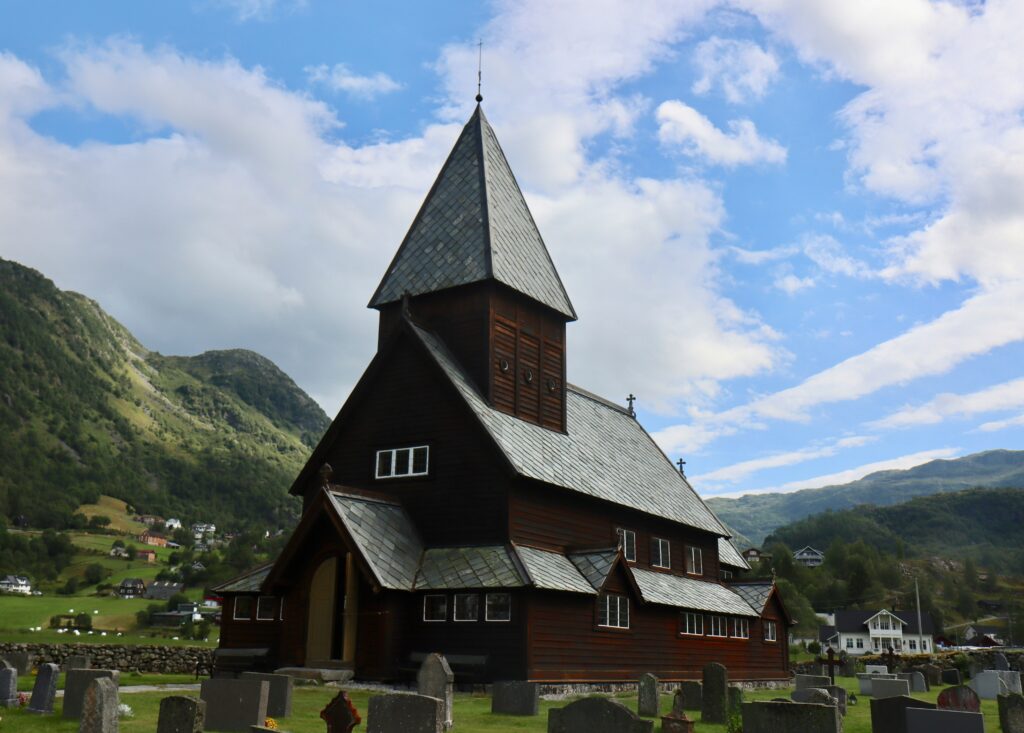
Back in the capital, Oslo offers a different kind of window into Norway’s past through its Viking heritage. The Viking Ship Museum (when open or in its current form if relocated) showcases an extraordinarily well-preserved 9th-century ship that was found in a burial mound, along with artifacts that reveal how Vikings traveled, traded, and honored their dead. Entry fees are typically modest by Norwegian standards, and some museums offer free or discounted evenings that are ideal for budget travelers. Spending a few hours here helps connect the landscapes you see across Norway with the seafaring culture that once sailed them.
Budget Breakdown: Weekly Trip Costs
Understanding daily budget tiers helps you plan realistically and make intentional trade-offs.
Tight Budget: $80–120 USD Daily ($560–840 USD Total)
For a basic budget trip to Norway, you can think of your costs in four main buckets: accommodation, food, transportation, and activities. Staying in hostel dorms at around $30–40 USD per night adds up to roughly $210–280 USD for a week, which fits well with typical budget hostel pricing across Norwegian cities.
If you self-cater most of your meals—making simple breakfasts and lunches from groceries and choosing modest dinners—you are likely to spend about $25–35 USD per day on food, or around $175–245 USD over seven days, which is noticeably lower than eating out for every meal in Norway’s generally expensive restaurants.
Getting around primarily by buses and public transport within cities at roughly $15–20 USD per day comes to about $105–140 USD for a week, in line with the higher but manageable cost of Norwegian transit when you stick to passes and scheduled services rather than taxis.
If you focus on free hikes and attractions, such as popular trails like Preikestolen and museum visits timed for free-entry evenings, your paid activities may only total about $10–15 USD per day, or $70–105 USD for the week, since most of what you are paying for is occasional museum tickets or small fees rather than big-ticket tours.
This kind of budget covers what most travelers need for a simple, outdoor-focused itinerary: hostel accommodation, basic meals built from grocery store shopping, local public transportation, and access to Norway’s many free hiking trails and public viewpoints. It also assumes you are taking advantage of free or discounted museum hours and spending a lot of time on casual exploration rather than structured excursions. What it does not include are more expensive add-ons like paid attractions every day, rental cars, organized commercial tours, frequent nights out drinking, or fine dining, all of which can raise daily costs quite quickly in Norway’s high-price environment.
Mid-Range Budget: $150–220 USD Daily ($1,050–1,540 USD Total)
For a mid-range trip to Norway, your budget stretches enough to add comfort and more paid experiences without going overboard. Mixing hostel stays with private Airbnb rooms at around $70–100 USD per night comes to roughly $490–700 USD for a week, which sits comfortably within typical mid-range accommodation costs in Norway.
On the food side, combining self-catered breakfasts or lunches with casual restaurant dinners usually means spending about $50–70 USD per day, or around $350–490 USD for seven days, which matches what you might expect for a mix of groceries and reasonably priced sit-down meals in Norwegian cities.
Transportation at this level is flexible enough to include buses, regional trains, and occasional day car rentals, with a daily estimate of about $30–50 USD adding up to roughly $210–350 USD for the week. That range can comfortably cover city transit plus classic rail journeys like the Bergen Railway or Flåm Railway when booked wisely, since these scenic routes are known to be pricier but very popular. For activities, planning to spend about $50–70 USD per day (around $350–490 USD for a week) gives room for a mix of paid attractions and free experiences: you might visit museums, pay for certain iconic hikes or viewpoints where fees apply, and join the occasional guided tour or experience, while still enjoying plenty of no-cost hikes and scenic walks.
With this kind of budget, you are effectively paying for comfortable but not luxurious accommodation, regular dining out at casual restaurants, regional train rides on well-known scenic routes, paid entries to museums and cultural sites, and a handful of guided or organized experiences. What you are not covering are top-end splurges such as fine-dining restaurants, renting a car for the entire trip, high-priced commercial tours every day, or stacking multiple paid experiences into each day, all of which can push daily costs into true luxury territory in Norway.
High-Range Budget: $500+ USD Daily ($4,000+ USD Total)
For a higher-range budget in Norway, you can lean into comfort, convenience, and more curated experiences while still stopping short of ultra-luxury. Expect to spend more on central, stylish accommodation, often in the $150–250+ USD per night range, which quickly adds up to roughly $1,050–1,750 USD for a week. This usually buys larger rooms, better locations, hotel breakfasts, and amenities like saunas or harbor views, especially in cities like Oslo or Bergen.
Food spending also climbs at this level, since you are likely to dine out most of the time and occasionally try higher-end or specialty restaurants. A realistic range is about $80–120 USD per day on meals and drinks, or around $560–840 USD over seven days, which fits typical Norwegian prices where a single main course at a mid- to high-end restaurant can already cost the equivalent of $25–40 USD before drinks. With this budget you can comfortably enjoy café breakfasts, nice lunches, and full dinners with wine or cocktails several times during your trip.
Transportation becomes more about convenience than strict savings. You might rent a car for most or all of your itinerary, use domestic flights to shorten long distances, and still take scenic trains or ferries for the experience. A reasonable estimate is $70–120+ USD per day for transport (around $490–840 USD per week), including a multi-day car rental with insurance and fuel, intercity trains, or internal flights when needed.
Activities and experiences are where a higher budget really shows. Setting aside $80–150 USD per day (roughly $560–1,050 USD for a week) gives you the freedom to book guided glacier walks, small-group fjord cruises, Northern Lights or wildlife safaris, zipline or via ferrata adventures, and premium museum or cultural experiences without much hesitation. You can still enjoy plenty of free hikes and viewpoints, but you now have room to add specialty tours and unique experiences several times during your trip, rather than just picking one or two.
Saving Money When Traveling to Norway: Strategic Tactics
Achieving budget travel in expensive Norway requires strategy, not deprivation. These proven tactics cut costs significantly while maintaining authentic experiences.
Transportation Savings While Traveling to Norway
- Advance train booking: Booking Bergen Railway tickets 1-2 weeks ahead yields 40-50% savings. Some “mini-price” fares are 60-70% cheaper, though non-refundable.
- Bus passes: Regional multi-day bus passes offer 20-30% savings over individual tickets. Purchase if planning multiple regional journeys.
- Walk/bike: Many Norwegian towns are genuinely walkable. Oslo, Bergen, and Trondheim are bikeable. Rentals cost $10-15 USD daily.
Accommodation Savings While Traveling to Norway
- Off-season travel: Visit September-October or May-June for 30-40% accommodation discounts versus July-August.
- Stay outside tourist hubs: Choosing villages over Oslo/Bergen saves 40-50% on accommodation while offering authentic experiences.
- Week-long bookings: Airbnb hosts offer substantial multi-week discounts (30-50%). Booking 7+ nights qualifies automatically.
Food Savings While Traveling to Norway
- Grocery shopping: Supermarkets like Rema1000 and Meny offer affordable staples. A grocery store meal costs $8-12 USD versus $25-35 USD at restaurants.
- Pack picnics: Prepare lunch from grocery stores. Save $15-20 USD daily by avoiding restaurant lunches.
- Happy hour: Some restaurants offer specials during 4–6 PM. Restaurant meals during happy hour sometimes cost $15-20 USD versus $30+ at dinner.
Activity Savings While Traveling to Norway
- Free hikes: Norway’s hiking trails are completely free. Hundreds of excellent hikes cost $0. Investment: good boots, weather-appropriate clothing.
- Free museums: Many museums offer free entry on specific evenings (usually 1 evening weekly). Oslo Museums website lists free entry times.
- Public ferries vs. cruises: Replace $100-200 USD commercial fjord cruises with $30-50 USD public ferries offering identical scenery.
Where to Stay in Norway
In Norway, you will find a wide spectrum of accommodations, and choosing the right mix can make a big difference to your budget.
Accommodation Types and Costs in Norway
Hostels are often the go-to option for budget travelers, with dorm beds commonly falling in the range of about $25–45 USD per night and private rooms often around $50–80 USD, though prices in Oslo and Bergen tend to sit near the upper end of that range. A smart way to save is to stay in smaller towns rather than the big cities, where nightly rates can be roughly 30–40% lower while still offering clean, comfortable places to sleep.
Airbnb and other vacation rentals are another solid option, especially if you value space and a kitchen. Entire apartments frequently run in the ballpark of $60–120 USD per night, and having your own kitchen lets you self-cater, which can offset the accommodation cost through savings on restaurant meals. For week-long stays, this often works out particularly well for couples or small groups, since the per-person nightly cost drops once you split the total.
For hikers and nature lovers, Norway’s mountain huts are a memorable and surprisingly affordable way to stay close to the trails. Many huts, especially those connected to the Norwegian Trekking Association (DNT), offer basic beds and shared facilities in beautiful, remote locations, with typical prices roughly around $20–50 USD per night depending on the level of service and membership discounts. Some include meals or can provide breakfast and dinner for an additional fee, making them excellent bases for multi-day treks.
Standard hotels in Norway usually start around $80–150 USD per night for mid-range quality, though averages can be higher in peak season or in very popular towns. Because accommodation in major tourist hubs is relatively expensive, the price-to-value ratio can sometimes feel poor, which is why many travelers reserve hotel stays for the occasional splurge night—perhaps in a particularly scenic location, or to enjoy amenities like a spa, big breakfast buffet, or waterfront view.
Cabins and cottages, often found in rural and coastal areas, strike a nice balance between comfort and cost. Smaller, simpler cabins commonly run about $50–100 USD per night and usually include basic kitchen facilities and a good level of privacy. They are popular with both locals and visitors for weekend getaways, and for travelers willing to self-cater and stay slightly outside busy centers, they can offer one of the best overall values in Norway.
Choosing by Region
- Oslo: Most expensive city. Consider neighborhoods outside the city center (Grünerløkka, Frogner) for 15-20% savings.
- Bergen: Expensive but slightly cheaper than Oslo. The city’s compact size makes any accommodation workable.
- Fjord regions: Small villages (Flåm, Undredal, Balestrand) offer authentic experiences and prices 30-40% below Oslo/Bergen.
- Trondheim and central Norway: Less touristy. Accommodation noticeably cheaper while cultural experiences remain rich.
Frequently Asked Questions About Traveling to Norway
September-October and May-June offer ideal combinations of good weather, manageable crowds, and lower prices (30-40% cheaper than peak summer). For Northern Lights, visit November-February in northern Norway. If you prioritize midnight sun and guaranteed warm weather, visit July-August, but expect peak prices and crowds.
Visit during shoulder seasons (May-June or September-October) for lower prices. Use public buses and trains instead of car rentals. Stay in hostels or small-town Airbnbs rather than hotels. Prepare meals from supermarkets rather than eating all meals at restaurants. Focus on free activities (hiking trails, public spaces, museum free-entry nights). Take public ferries instead of commercial cruise tours. Book transportation 2+ weeks in advance for discounts.
No. Public buses, trains, and ferries comprehensively connect Norway. Trains offer the most scenic routes at reasonable prices. Car rentals are expensive and unnecessary for linear routes (Oslo to Bergen). Rent cars only for remote regions or if traveling with groups (rental costs split).
Iconic destinations include Geirangerfjord and Sognefjord (fjord scenery), Preikestolen (dramatic cliff hike), Flåm Railway (scenic train journey), Oslo (capital city and Viking heritage), Bergen (gateway to fjords), Tromsø (Northern Lights and Arctic culture), and Jotunheimen National Park (mountain hiking). Less-touristy alternatives include Trondheim, Stavanger, and smaller villages like Balestrand or Flåm.
Budget travelers spend $560-840 USD weekly (hostels, self-catering, free activities). Mid-range travelers spend $1,050-1,540 USD weekly (mix of accommodation and dining options). Luxury travelers can spend $4,000+ USD weekly (hotels, upscale restaurants, multiple paid experiences). Peak summer costs 20-30% higher. Shoulder seasons and winter are cheaper.
Yes. Restaurant dining is expensive ($25-50 USD per meal at casual restaurants). Supermarket grocery shopping is reasonable ($8-12 USD for prepared meals). Self-catering breakfast and lunch, with one restaurant dinner daily, keeps food costs to $35-50 USD daily. Alcohol is expensive. Wine/beer from liquor stores is cheaper than bar drinks.
Northern Lights in Norway are visible September-March, with peak activity December-February when nights are longest and darkest. Viewing requires clear skies (variable), so multiple nights increase chances. Visit northern Norway (Tromsø, Alta) for best viewing. Aurora visibility is never guaranteed. Supplement with other winter activities.
Pack layered clothing (Norwegian weather is variable), waterproof outer jacket and rain pants (frequent rain), warm hat, gloves, and thermal underwear (even summer is cool), comfortable hiking boots, swimsuit (many accommodations have hot tubs or saunas), and phone/power adapters for Norwegian outlets.
Yes. Norway has low crime rates and is safe for solo female travelers. Normal urban awareness applies (don’t leave valuables unattended, be aware of surroundings). Norway is genuinely welcoming. Outdoor safety requires appropriate preparation for mountain weather and cold water.
EU/EEA citizens need only a passport. UK citizens visit visa-free for up to 6 months. US, Canadian, and Australian citizens visit visa-free for up to 90 days. Check current requirements with your government before traveling. Travel insurance is strongly recommended.
Conclusion
Norway’s reputation as an expensive destination has deterred countless travelers from experiencing its unmatched natural beauty and rich cultural heritage. Yet this guide reveals a powerful truth: with strategic planning and budget-conscious decisions, visiting Norway on a budget transforms from impossible fantasy into achievable reality.
The key is timing. Visit during shoulder seasons (May-June or September-October) to slash prices by 30-40% while enjoying pleasant weather and manageable crowds. Navigate transportation strategically using scenic railways, affordable regional buses, and public ferries—experiences doubling as sightseeing. Build realistic daily budgets ($80-120 USD for tight budgets; $150-220 USD for mid-range comfort) and stick to them through deliberate choices about accommodation, food, and activities.
Explore iconic Norwegian fjords—Geirangerfjord and Sognefjord—through affordable public ferries rather than expensive cruise markups, accessing identical breathtaking scenery at a fraction of commercial tour prices. Layer in the endless free experiences: hiking trails like Preikestolen, public beaches, and urban exploration. Seek out museum free-entry nights and explore underrated regions beyond Oslo-Bergen (Trondheim, Tromsø, Røros).
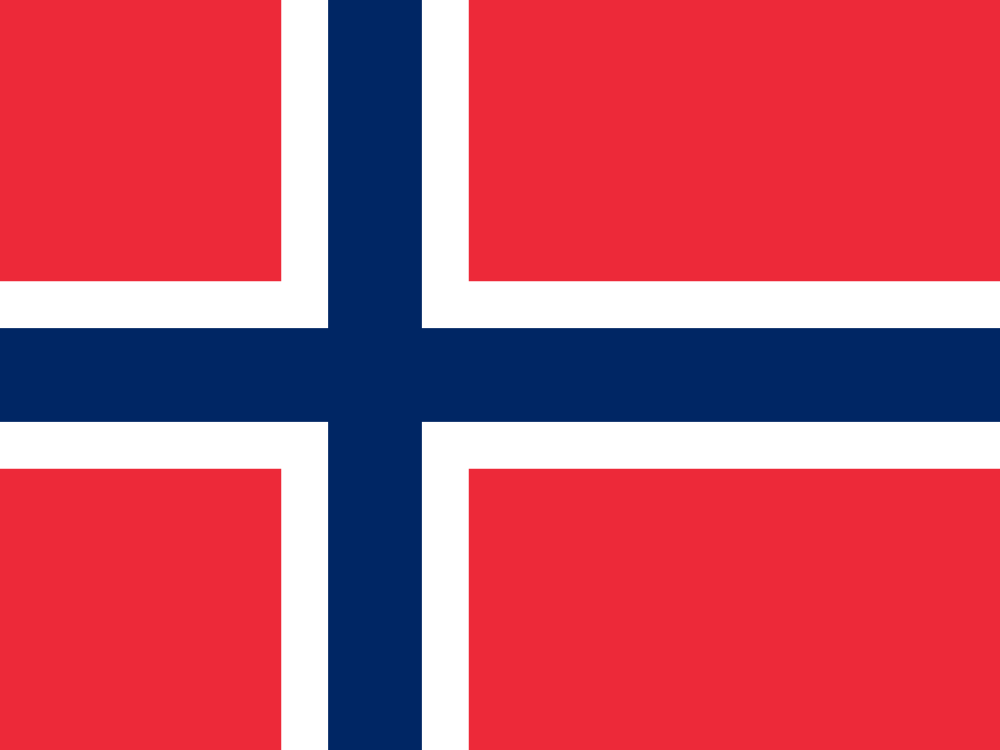
Facts About Norway
- Capital: Oslo
- Official Language(s): Norwegian
- Population: 5,601,049 (based on 2025 Estimate)
- Currency: Norwegian Krone (NOK) | Exchange Rate
- Time Zone: Central European Time (GMT+1)
- Electricity Plug Type: Types C & F
- Drive on the: Right